

12 December 2025
Karate vs Jiu Jitsu for Kids: Which Martial Art Is Better?
Karate vs Jiu Jitsu for Kids: Which Martial Art Is Better?
Many parents search for karate vs jiu jitsu for kids because they want the benefits of martial arts, but they are not sure which style fits their child best. Both karate and Brazilian jiu jitsu (BJJ) build confidence, discipline, and respect — but they feel very different in class.
Quick answer: should my child start with karate or jiu jitsu?
Most kids do well starting with karate if you want strong basics in focus, listening skills, and standing techniques like blocks, strikes, and kicks. It looks more like what kids imagine when they picture “martial arts.”
Jiu jitsu is often the better first choice if your main goal is realistic self defence, especially against bigger kids. Classes focus on takedowns, ground control, and submissions in a very hands-on, partner based way.
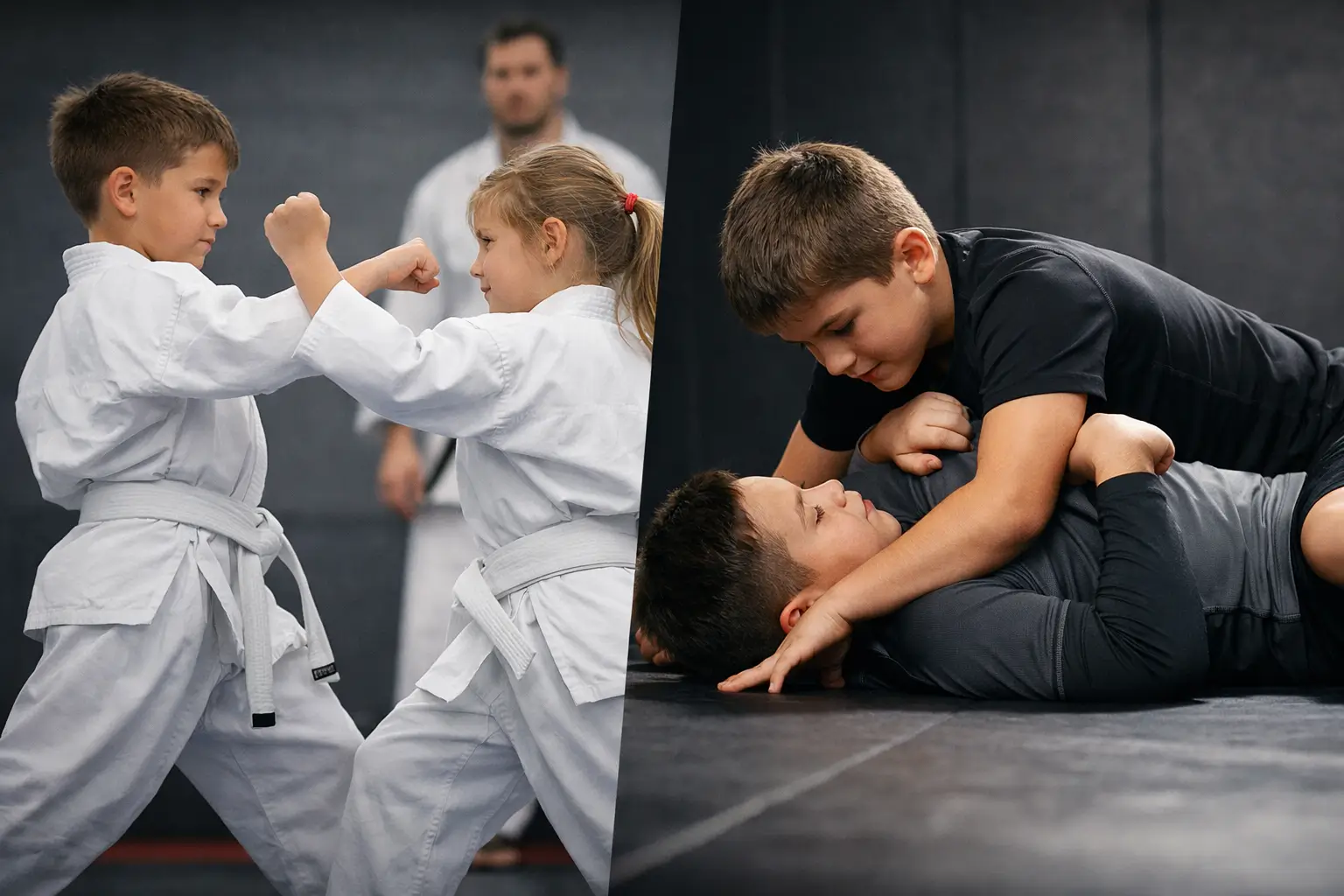
How karate and jiu jitsu look different in class
Understanding what actually happens in a kids martial arts class makes the decision much easier.
- Lines and structure. Kids usually stand in rows facing the instructor and follow a clear routine.
- Basics and forms. They practice stances, blocks, strikes, and simple kick combinations.
- Kata or patterns. Children learn pre set sequences of moves to build memory and focus.
- Light pad work. Kids hit shields or targets to feel contact without getting hurt.
- Respect rituals. Bowing, “yes sir/ma’am,” and dojo rules are built into every class.
- Partner drills. Kids spend more time paired up, working on takedowns and ground positions.
- Live grappling. Controlled “rolling” (sparring) teaches kids how to apply techniques against resistance.
- Less striking. Most children’s BJJ programs do not include punches or kicks at all.
- Close contact. Kids grip uniforms, wrestle on the mat, and learn to stay calm under pressure.
- Game based learning. Many drills are structured as fun grappling games to keep kids engaged.
Benefits of karate for kids
Karate is usually the first style that comes to mind when parents think about kids martial arts. For many families, it is a solid place to start.
- Clear rules and structure. Great for kids who need help with listening, focus, and self control.
- Easy to understand progress. Belt colors and stripes show kids that effort leads to rewards.
- Good overall fitness. Kicking drills, stances, and cardio games build strength and coordination.
- Strong emphasis on respect. Bowing and polite language carry over into home and school.
- Plenty of schools. It is usually easier to find a karate for kids program close to home.
Benefits of jiu jitsu for kids
Brazilian jiu jitsu has grown quickly in Canada and worldwide. Parents often hear that it is excellent for realistic self defence and confidence.
- Practical self defence. Kids learn how to escape grabs, control bigger opponents, and get to safety.
- Problem solving under pressure. Grappling feels like physical chess, which builds calm decision making.
- Confidence for smaller kids. Leverage can beat size, which is empowering for many children.
- Great outlet for energy. Constant movement helps active kids burn off steam in a safe way.
- Supportive community. Close training often creates tight knit teams.
Which is safer: karate or jiu jitsu for kids?
Parents often worry that one style might be more dangerous than the other. In reality, the school’s safety culture matters more than the style itself.
- Karate safety. Most kids programs use light contact, plenty of pad work, and age appropriate drills. Sparring should be controlled and supervised, with full protective gear for older children.
- Jiu jitsu safety. Kids practice takedowns and ground control, so proper breakfalls and tapping early are crucial. Good coaches watch closely and match partners by size, age, and experience.
At a well run school, both karate and jiu jitsu can be very safe for children. Do not hesitate to ask about safety rules, injury rates, and how instructors handle rough behaviour.
Karate vs jiu jitsu for kids: how they match your goals
Here is a quick comparison based on common parent goals.
| Goal | Karate | Jiu jitsu |
|---|---|---|
| Confidence & respect | Both work; karate’s structure often makes progress more visible for young kids. | Very strong too; close training builds resilience and calmness under pressure. |
| Focus & school habits | Karate slightly edges ahead due to routines, line work, and clear expectations. | Great for problem solving, but classes feel less “still” and more partner-driven. |
| Realistic self defence | Strong basics; depends on how the school teaches contact and awareness. | Usually wins for bullying-style grabs and ground situations. |
| Fitness & coordination | Emphasis on striking, footwork, balance, and cardio drills. | Grip strength, core stability, and body awareness on the ground. |
| Competition & long-term | Established tournaments and long-term development in most areas. | Very active kids competition scene in many cities. |
Which suits your child’s personality?
You know your child best. Use these simple profiles as a guide, not a strict rule.
Kids who often thrive in karate
- Like clear rules and routines.
- Enjoy copying moves and practising until they “look right.”
- Respond well to structure, uniforms, and traditions.
- Are excited by fast kicks, punches, and forms they can show family.
Kids who often thrive in jiu jitsu
- Like rough and tumble play or wrestling on the floor.
- Enjoy problem solving and figuring out how to escape or control positions.
- Do not mind close contact and being in another person’s personal space.
- Need a strong, physical outlet for extra energy.
If your child is shy or anxious, either style can help. Look for an instructor who is patient, positive, and willing to introduce your child gradually rather than pushing them too hard in the first class.
What about kids with special needs?
Many parents ask whether karate or jiu jitsu for kids is better for children with ADHD, autism spectrum diagnoses, anxiety, or other learning differences.
- Karate can work well when a child responds to clear rules, repetition, and predictable structure.
- Jiu jitsu can be great when a child needs movement, deep pressure input, and hands on learning.
The key is not just the style, but whether the school has experience with karate for special needs kids or inclusive jiu jitsu programs. Ask how they support kids who need extra time, breaks, or modified drills.
Cost and commitment: what parents should expect
In Canada, prices for both karate and jiu jitsu are fairly similar and vary by city, facility, and how many classes per week you attend. In most cases:
- Both styles use a monthly membership model rather than pay per class.
- You will pay extra for uniforms (gi), grading or belt tests, and optional tournaments.
- Most parents start with 2 classes per week for steady progress without burning kids out.
Ask any school for a clear breakdown of fees, contract terms, and what happens if your child needs to pause for holidays or other sports.
How to choose between karate and jiu jitsu near you
Once you know the main differences, the final decision should come down to the quality of the local program, not just the name of the style.
- Search locally. Look up “karate for kids near me,” “kids martial arts near me,” or “jiu jitsu for kids” with your city name.
- Check their website. Look for real photos of kids classes, instructor bios, and clear info about ages and schedules.
- Book a trial class. Most schools will let your child try a class with no long term commitment at first.
- Watch the instructors. Notice how they speak to children, handle mistakes, and keep everyone safe.
- Ask your child. After the trial, ask “Did you have fun, and did you feel safe?” Their answer matters most.
Bottom line: karate vs jiu jitsu for kids
If your child loves the idea of fast strikes, strong stances, and traditional uniforms, kids karate classes are a natural place to start. If they enjoy wrestling, problem solving, and close contact, jiu jitsu for kids may be the better first step.
The good news is that you do not have to choose forever. Many children start in one style and later add the other, building a very well rounded martial arts base. Start with the program where your child feels safe, supported, and excited to come back.